
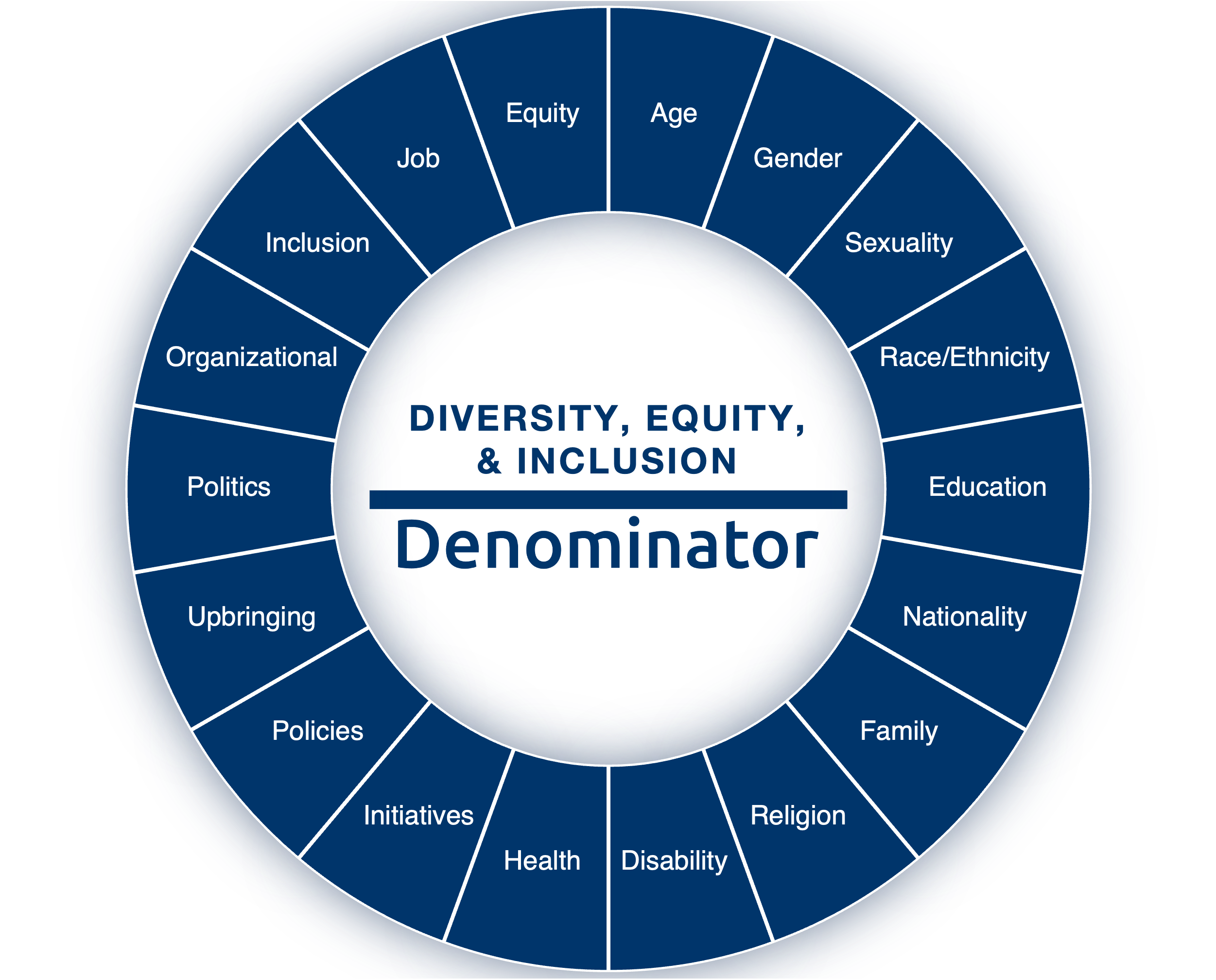
Denominator’s Diversity, Equity, & Inclusion (DEI) Country Index is the most comprehensive and sophisticated measure of countries DEI performance available on the market. It looks at more than 55 DEI indicators across multiple DEI dimensions within the three pillars of Diversity, Equity, & Inclusion.
More than 195+ countries are covered, and the DEI Country Index ranks the countries on both aggregated/total DEI performance and the performance on the various sub-dimensions of DEI such as Gender, Race/Ethnicity, Age, Sexuality, Education, Health, Disability etc.
The DEI Country Index consists of two main components. One is each country’s score based on its performance across the 55 indicators. The second component is the companies aggregated DEI performance in each country to ensure the DEI Country Index captures not just the macro level DEI framework and performance, but also the actual DEI behavior within a country.

What is DEI?
Diversity, Equity, & Inclusion is a multidimensional concept build on the three pillars of diversity, equity, and inclusion. The concept seeks to capture the Social dimension of ESG, by exploring how diverse the people living in different countries are, and how countries perform in respect to accommodate that diversity and ensuring participation of all members of society.
Diversity
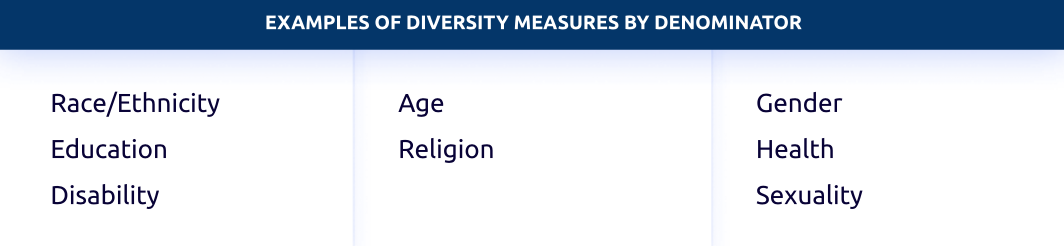
When speaking of Diversity, it refers to an embodiment of a particular groups’ composition, in this case the countries composition. Diversity can take various forms, such as diversity in gender, race or religious orientations. In this regard Diversity is a composite of the various differences that are represented in each country. With the DEI Country Index, Denominator accounts for Diversity by measuring all the possible ways that people might be different, be that in terms of e.g., gender, sexuality, ethnicity or religious orientation. Examples of indicators that measure diversity in the index are shown below.
Equity
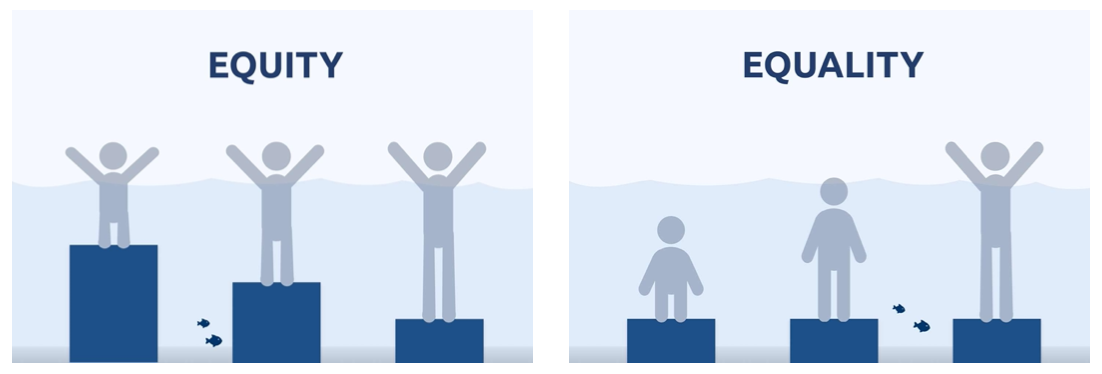
Equity speaks to the ability to create fair access, chances, and opportunities for all the people that live in a country. It is based on the notion that people are diverse, hence they need different accommodations in order to participate on equal terms in their daily lives. Equity is thus focused on the government/country’s actions to accommodate for people’s cultural, physical, or other Diversity differences to participate in an equal manner. Equity is thus a measure of how well countries incorporate measures of fairness and equal treatment into their country’s institutions. Indicators that affect Equity in DEI Country Index are therefore initiatives that enable individuals. Either by providing unchallenging access to qualification of important skills, such as for example public education, or by compensating individuals for potential costs such as for example healthcare.
Inclusion
The last pillar of DEI, Inclusion, aims at identifying barriers of entry for certain groups and promote organizational activities that fosters a tolerant and including environment for everyone. This pillar speaks to the need for ensuring that individuals have room to thrive and that cultural as well as physical Diversity is welcomed and tolerated. Inclusion also focusses on engaging individuals in the decision-making process and makes it possible for individuals to be involved in their community.
DEI at Country Level
The DEI Country Index reflects how countries perform compared to each other in their ability to secure a diverse, equitable, and inclusive environment for their citizens. It measures performance through more than 55 indicators impacting Diversity, Equity, or Inclusion in 195+ countries around the world as well as actual DEI behavior in a country. The DEI Country Index is calculated by the following formula:

In the formula Wk denotes the determined weights that are assigned to each of the four final components of the score in the aggregated measure of DEI. Diversityi Equityi, and Inclusioni denotes the pillar score for each separate country. Finally, the AverageCompanyDEIi is the product of the average DEI performance score for all companies across the country1 to account for the actual effectiveness of countries DEI frameworks.
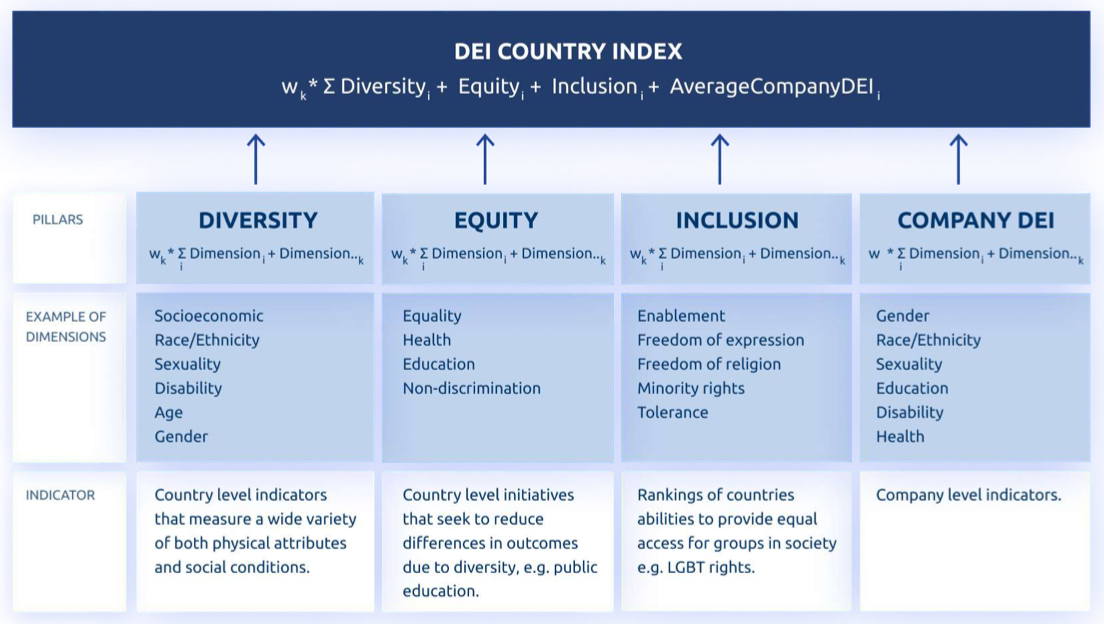
The figure summarizes the conceptual logic of the DEI country ratings. As seen here, the country ratings are based of more than 55 indicators from the country level that are distributed to appropriate dimensions within the pillars DEI. The DEI dimension above are purely examples of dimensions included in the model and does not make the exhaustive list of dimensions. Each indicator is normalized to reflect a score from 0 to 100. This makes it possible to rank and compare the countries according to their performance on all the individual indicators in aggregate. The score is constructed through linear weighted aggregation.
Creating the Dimensions of DEI
To make sound measurements of the dimensions that compose the score of each DEI pillar, an exploratory factor analysis was conducted to examine the substantial implications that bear with each dimension that goes into the linear aggregation that compose the DEI rankings.
Example of the indicators from the factor analysis
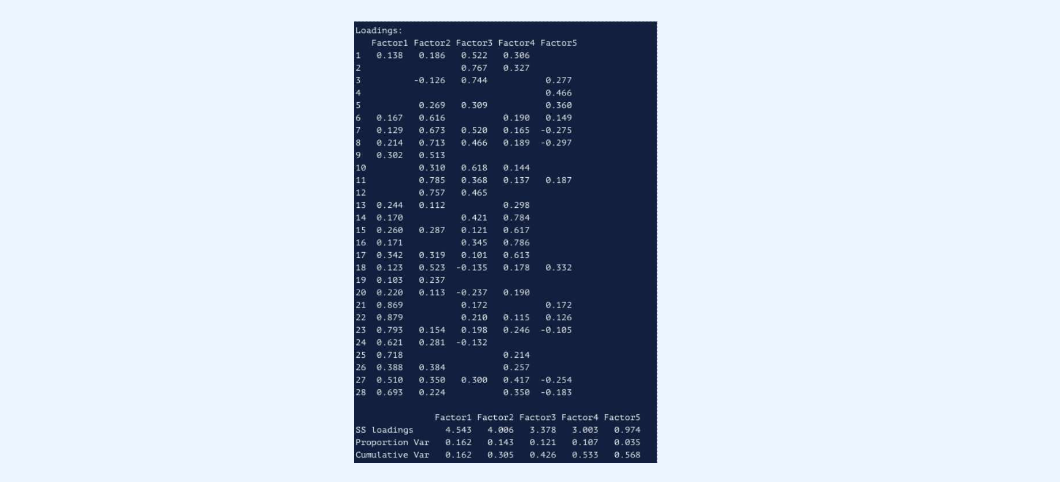
Exploratory factor analysis also aids the decision-making regarding how the different indicators are related to each other and helped tweak the ranking calculations to make a statistically and theoretical sound measure of DEI. More specifically a Bayesian Exploratory Factor Analysis (BEFA) was conducted, followed with a factor analysis with Varimax rotation to examine possible implications for different modeling approaches to the DEI Country Index. Both approaches yielded the same substantial results.
Please contact us if more details are needed in regard to the analysis or methodology.