
Most DEI efforts only focus on a few DEI dimensions. However, a single or narrow approach to DEI leads to lost opportunities and minimizes return on DEI investment. Furthermore, Denominator asses the 15 DEI dimensions across not only the Board level but also the Executive management, and the entire workforce.
The comprehensive approach entails that Denominator measure and score on more DEI dimensions than any other provider on the market, allowing Denominator to assist clients to manage otherwise unidentified risks, identify new opportunities and create more sustainable improvements.
DEI should not be a zero-sum game, but a win/win investment.
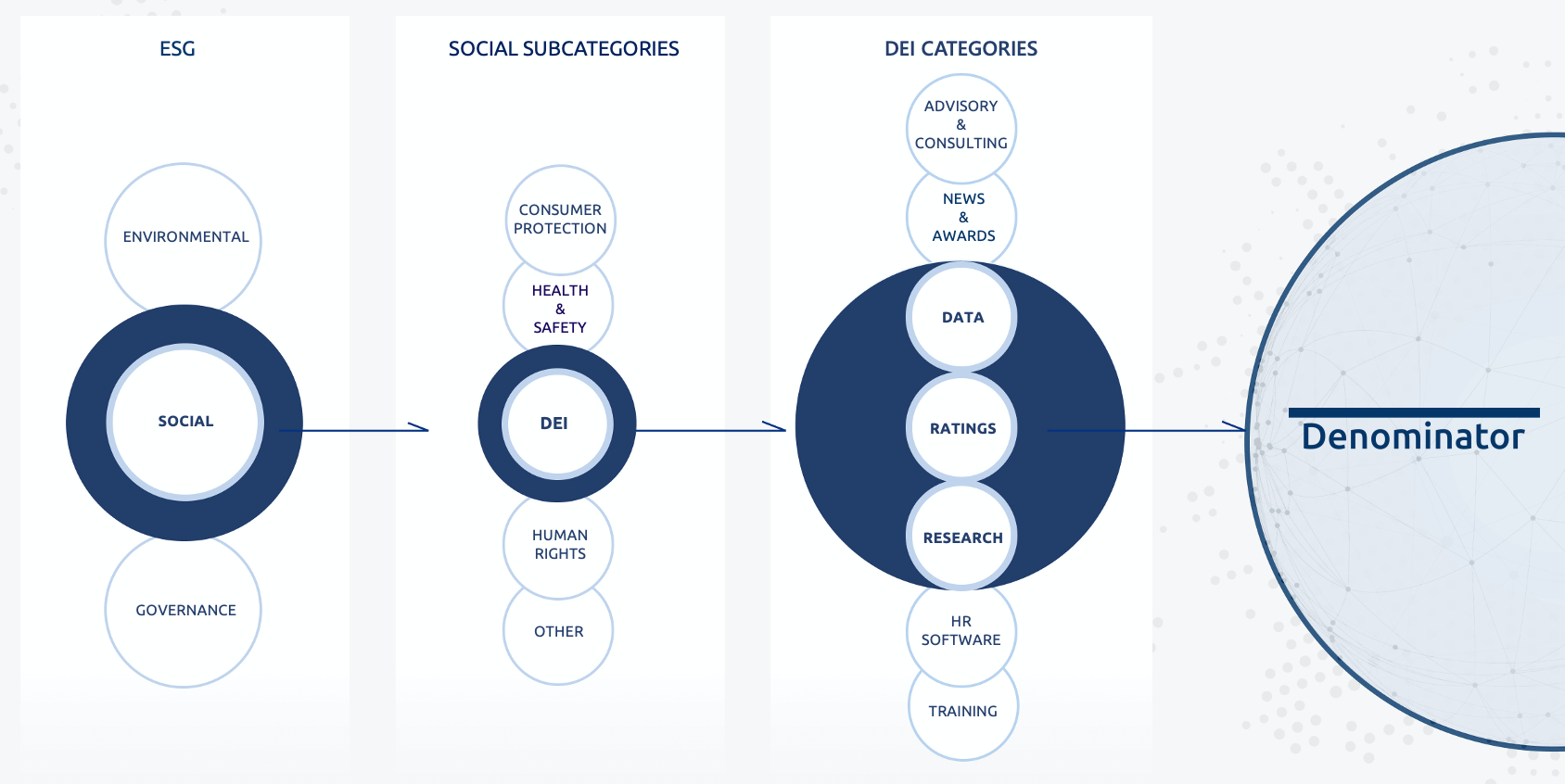
Our data and analytical insights drive the most comprehensive DEI rating models and indexes and aims to create the global standard for measuring DEI performance. These measures allow our customers to track their own DEI performance, benchmark against peers , and analyze company portfolios’ DEI performance – including supplier or investment portfolio.
It is our purpose to ensure fact-based transparency and standards to DEI across organizations, industries, and countries. We do this to enable a more balanced world for growth and improved human interaction. Structured and quantitative data creates both transparency and accountability and the data speak for itself. The value of improving DEI performance is being documented by more and research.
“…our latest analysis reaffirms the strong business case for both gender diversity and ethnic and cultural diversity in corporate leadership - and shows that the business case continues to strengthen. The most diverse companies are now more likely than ever to to outperform less diverse peers on profitability [...] Moreover, we found that the greater the representation, the higher the likelihood of outperformance.”
- McKinsey&Company in Diversity wins: How inclusion matter, May 19 2020
Quantifying and tracking DEI data consistently has been difficult historically because of the lack of reporting requirements and qualitative nature of available datasets – according to our own proprietary research, 96% of information used is survey based. Data is generally scattered and hard often hard to access.
Data-first
As a data-first company, Denominator is leading the way in researching publicly available sources. These range from structured official registries to unstructured sources like company filings, news & websites. All sources are gathered and standardized into DEI relevant data variables, and continuously monitored to identify changes.
Our data, scores, and ratings can be accessed by clients who seek to improve or benchmark their DEI performance or monitor their supply chain, investments, or counter-parties. Denominator also provides research and analytics for DEI thought leadership, speaking arrangements, blogs, and overall contributing to DEI research.
The data is available via a variety of ways depending on each clients’ needs such as the Denominator user interface, through a third party, via a data file, or via API.
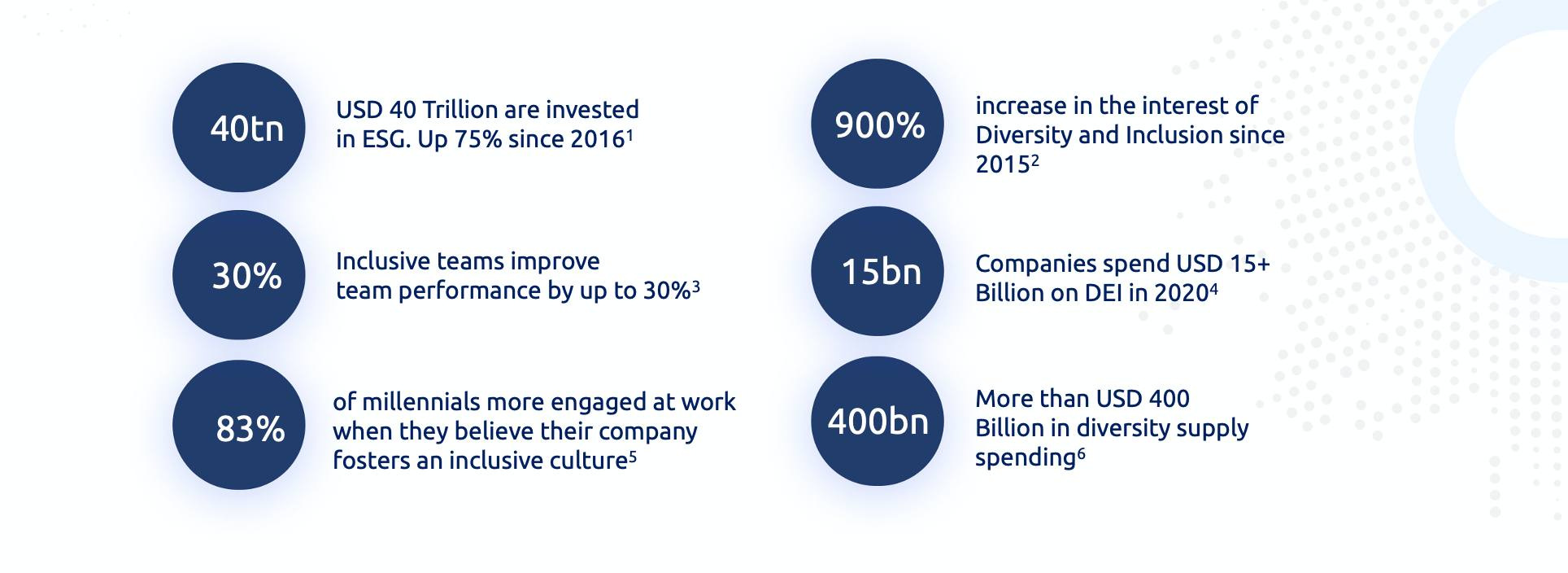
Examples of DEI benefits
Todays Reporting on DEI
To date, reporting requirements around DEI have been sparse and many companies still disclose most of their DEI-relevant data on a voluntary basis. In recent years we have seen rapid changes in Climate and Environment- related regulatory standards and filing requirements. The Social aspect of ESG is the next area where more regulatory filings will be required.
The trend is already clear. The UK introduced gender pay gap reporting requirements for qualifying companies over 250 employees in 2017. In the US, in 2019 a new Illinois law requires corporations to report diversity on corporate boards, and Nasdaq has announced a similar Board Diversity rule (see below). In addition, the rollout of the EU’s Sustainable Finance Disclosure Regulation (SFDR) and its Corporate Sustainability Reporting Directive (CSRD) are clear indicators that transparency around these metrics will increase in coming years.